
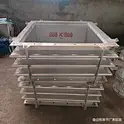
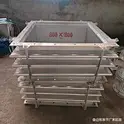
Rectangular compensator
Rectangular compensator, also known as rectangular expansion joint or rectangular duct compensator, is a flexible compensation component specially designed for square and rectangular ducts, flue gas pipelines and dust removal pipes. It is a key accessory in industrial ventilation, flue gas treatment and environmental dust removal systems. It is mainly divided into two mainstream types: metallic bellows type and non-metallic fabric type. It effectively solves problems such as pipeline thermal expansion & contraction, equipment vibration, installation deviation and stress concentration. It can adapt to complex working conditions including low pressure, large cross-section, high temperature and dust-laden media, ensuring long-term safe and stable operation of pipeline systems.
1. Working Principle
When industrial pipelines transport hot air, flue gas and high-temperature gas, temperature changes will cause thermal elongation and cold shrinkage. Meanwhile, vibration from operating equipment, on-site installation errors and slight foundation settlement will generate multi-directional displacements (axial, lateral and angular) on pipelines. This creates large mechanical stress on pipes, flanges, fans, furnaces and valves, which may easily lead to pipeline deformation, weld cracking, equipment damage, air and flue gas leakage.
The rectangular compensator absorbs multi-directional displacements through elastic deformation of its flexible body (stainless steel bellows or composite fabric membrane), and releases residual thermal stress inside pipelines. It can also isolate vibration transmission induced by induced draft fans and kilns, reduce pipeline resonance, dampen vibration and noise, maintain sealing performance and compensate installation misalignment, so as to protect the whole pipeline system.
2. Main Structure
The rectangular compensator adopts compact and well-designed structure, consisting of five core parts with separate functions to guarantee sealing, wear resistance and operational stability for harsh industrial conditions.
- Rectangular End Frame / Flange: Made of carbon steel or stainless steel plate. It serves as the supporting frame for connection. Standard rectangular dimensions match pipe flanges precisely, with flat contact surface for good sealing. It provides stable support and prevents displacement during operation.
- Flexible Compensation Body: The core functional part. Metallic type uses multi-layer stainless steel bellows with good toughness, fatigue resistance and corrosion resistance. Non-metallic type is multi-layer composite fabric membrane made of fiberglass, silicone rubber, PTFE anti-corrosion coating and high-temperature felt. It features excellent high-temperature resistance, corrosion resistance, wear resistance and high flexibility.
- Inner Flow Liner: Made of carbon steel or stainless steel. It is installed inside the compensator to protect the flexible body from direct scouring of high-speed dusty flue gas and hot air, reduce abrasion and avoid tearing or aging of flexible layers. It also optimizes airflow smoothness inside the pipeline and extends service life.
- Limit Tie Rods / Hinges: Safety protection components mounted outside the compensator. They limit the maximum compression and offset of the compensator to avoid rupture caused by over-displacement under abnormal pressure or displacement, greatly improving system safety.
- Auxiliary Sealing Parts: Equipped with high-temperature gaskets and fasteners to ensure tight sealing at flange joints for micro-positive and micro-negative pressure pipelines, preventing medium leakage, energy loss and environmental issues.
3. Performance Comparison of Two Main Types
表格
| Comparison Item | Non-metallic Fabric Rectangular Compensator | Metallic Bellows Rectangular Compensator |
|---|---|---|
| Main Material | Fiberglass composite, silicone rubber, PTFE coating | Multi-layer bellows in SS304, SS316L, SS321 |
| Temperature Range | -40℃ ~ 1200℃, excellent high temperature resistance | -80℃ ~ 600℃, stable for low & medium-high temperature |
| Pressure Rating | For micro-positive / micro-negative low-pressure ducts | Higher pressure capacity, suitable for medium-low pressure |
| Compensation Capacity | Great flexibility, large axial, lateral & angular compensation | Stable elasticity, long service life under repeated displacement |
| Corrosion & Wear Resistance | Resist acid, alkali and flue gas corrosion, good for dusty gas | Resist moisture and acid/alkali corrosion, good wear performance |
| Key Advantages | Light weight, low cost, large compensation, no spring reaction force, easy installation | Robust structure, anti-aging, excellent sealing, long service life |
| Typical Application | Power plant flues, cement kilns, dust ducts, hot air pipes | Chemical ventilation, low-temperature flue gas, precision air ducts, pipelines with relatively higher pressure |
4. Product Advantages & Application Fields
Core Advantages: Integrated rectangular design, direct matching with square pipes without reducers. It can absorb multi-directional pipeline displacement with high compensation efficiency. It achieves vibration reduction, noise control, leak-proof sealing, wear and aging resistance. Easy installation and maintenance, low replacement cost, suitable for various severe industrial conditions, reducing pipeline failure rate and maintenance cost.
Application Industries: Thermal power plants, cement, metallurgy, chemical industry, waste-to-energy plants, HVAC, environmental dust removal, kiln equipment and other flue, air, hot air and dust removal pipeline systems.


