
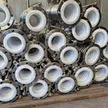
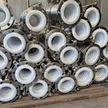
Customizable Flanged 304/316 Stainless Steel Metal Hose
1/2'' -10''
This customizable flanged metal hose is engineered as a flexible connector for demanding industrial piping systems, combining the corrosion resistance of 304 or 316 stainless steel with the mechanical protection of a braided exterior. It is designed to absorb vibration, compensate for misalignment, and accommodate thermal expansion in applications ranging from steam and hot oil to corrosive chemicals and gases.
Delivery
FOB
minimum order
1 piece
Supply Ability
100piece / Month
Country of Origin
China
Stock Time
30Day
Quantity:
US $1.00 - US $1000.00 / piece
Construction and Materials
The hose assembly consists of a corrugated stainless steel inner core (available in AISI 304, 316, or 316L) which provides flexibility and pressure containment. The core is protected by a stainless steel wire braid—typically single or double layer—that reinforces the hose against internal pressure and external abrasion. The end connections are flanges, which can be customized to match specific pipeline standards including ANSI, DIN, JIS, or GOST. Flange materials may be carbon steel or stainless steel to suit the operating environment.
Material Selection: 304 vs. 316
304 Stainless Steel: A cost-effective general-purpose alloy suitable for most water, steam, and mild chemical applications. It offers good corrosion resistance in typical industrial atmospheres but is susceptible to chloride attack.
316/316L Stainless Steel: Contains molybdenum, which significantly enhances resistance to pitting and crevice corrosion, particularly in chloride-rich environments, marine atmospheres, and aggressive chemical media. For welding-intensive assemblies, low-carbon 316L is often preferred to prevent carbide precipitation.
Key Performance Characteristics
Temperature Range: Capable of handling extreme temperatures from cryogenic levels up to approximately 600°C (depending on the specific construction and braid).
Pressure Rating: Working pressure varies with diameter and braid configuration, typically ranging from 0.6 MPa to 2.5 MPa or higher for reinforced double-braid designs.
Flexibility: The corrugated profile allows for bending to accommodate installation offsets and absorb movement without transmitting stress to fixed equipment.
Customization: Available in nominal diameters from DN6 up to DN700 (or DN600 depending on the manufacturer), with custom lengths, flange drilling patterns, and braid configurations available upon request.
Typical Applications
This flanged metal hose is suited for:
Chemical and Petrochemical: Transfer of corrosive fluids, vapors, and gases where 316L is often specified.
Steam and Thermal Systems: Handling saturated steam, hot oil, and exhaust gases where flexibility and high-temperature resistance are required.
General Industrial Piping: Compensating for pump vibration, pipe misalignment, and thermal expansion in water, air, and gas lines.
Ordering Considerations
To specify the correct assembly, the following parameters should be defined: operating temperature and pressure, media compatibility (to select 304 vs. 316), nominal diameter, flange standard and material, and required assembly length.


