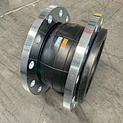
Single Axial Floating Flanged Rubber Expansion Joint Connector with Separate Tie Rods
DN50-DN1000 2''-20''
The Single Axial Floating Flanged Rubber Expansion Joint Connector with Separate Tie Rods is a high-performance piping component engineered to absorb axial movement, reduce vibration, and compensate for misalignment in industrial piping systems. Combining a flexible rubber body with floating flanges and independently adjustable tie rods, this expansion joint delivers reliable sealing performance and structural stability across a wide range of demanding applications.
Delivery
FOB
minimum order
1 piece
Supply Ability
100piece / Month
Country of Origin
China
Stock Time
30Day
Quantity:
US $1.00 - US $10000.00 / piece
Construction and Design
The core of the joint is a molded rubber bellows, typically fabricated from premium compounds such as EPDM, NBR, neoprene, or natural rubber, selected according to the conveyed medium and operating environment. The rubber body is reinforced with multiple layers of high-tensile synthetic fabric or steel wire, providing excellent pressure resistance and fatigue durability while maintaining flexibility. Each end is fitted with a floating flange, usually made of carbon steel, stainless steel, or ductile iron, which rotates freely to simplify bolt-hole alignment during installation. The flanges are secured to the rubber body through a robust bead-and-ring arrangement that ensures a tight, leak-proof connection under pressure.
Separate Tie Rods
The unit is equipped with separate tie rods—individual rod assemblies mounted externally between the two flanges. Unlike integrated limiting devices, these separate tie rods serve multiple functions: they restrain excessive axial extension caused by internal pressure thrust, protect the rubber bellows from over-stretching or damage during operation and shutdown, and allow precise adjustment of the allowable movement range. Because the rods are separate components, they can be installed, adjusted, or removed independently, offering greater flexibility in commissioning and maintenance. Properly set, the tie rods permit the designed axial compression and extension while blocking unacceptable displacement, thereby extending service life and enhancing system safety.
Performance Characteristics
This expansion joint excels in absorbing axial compression, axial extension, and minor lateral and angular movements. Its floating flange design compensates for flange misalignment and simplifies installation in confined spaces. The rubber element provides outstanding vibration isolation and noise reduction, protecting pumps, valves, and adjacent equipment. The product typically operates across a broad temperature range and is available in various pressure ratings to suit different system requirements.
Applications
The connector is widely used in water supply and drainage systems, HVAC installations, chemical processing plants, power generation facilities, marine piping, and general industrial pipelines. It is particularly suited for locations where thermal expansion, equipment vibration, or foundation settlement must be accommodated without imposing excessive stress on the piping network.
Installation and Maintenance
Installation requires proper alignment of the mating flanges and uniform tightening of bolts to the recommended torque. The separate tie rods should be adjusted to the specified gap so that the bellows can move within its design limits without being over-constrained. Periodic inspection of the rubber body for cracking, aging, or deformation, together with verification of tie rod settings and bolt tightness, ensures long-term dependable service. The modular nature of the separate tie rods allows straightforward replacement or readjustment when system conditions change.
Summary
With its flexible rubber bellows, rotatable floating flanges, and independently adjustable separate tie rods, this single axial floating flanged rubber expansion joint connector offers a dependable, versatile solution for motion compensation, vibration control, and alignment correction in modern piping systems.
Recommend Products