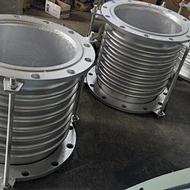
welding single metal expansion joint
DN100-DN3000
The Single Metal Expansion Joint with Welding Ends is a high-performance flexible connector designed to absorb thermal expansion, vibration, and movement in piping systems. Featuring a single U-shaped bellows element constructed from longitudinally welded metal sheets, this expansion joint provides reliable compensation for axial, lateral, and angular displacements in industrial applications.
Manufactured through hydraulic or mechanical forming processes, the bellows element consists of multiple corrugations that deliver inherent flexibility while maintaining structural integrity under demanding operating conditions.
Manufactured through hydraulic or mechanical forming processes, the bellows element consists of multiple corrugations that deliver inherent flexibility while maintaining structural integrity under demanding operating conditions.
Delivery
FOB
minimum order
2 pieces
Supply Ability
10pieces / Month
Country of Origin
CHINA
Stock Time
20-25Day
Quantity:
US $150.00 - US $10000.00 / pieces
Key Features
- **Single Bellows Design**: One U-shaped bellows element with multiple waves for effective movement absorption.
- **Welding End Connections**: Direct weld attachment to piping systems, eliminating flange leakage points and reducing installation costs.
- **Material Versatility**: Available in stainless steel grades including 321, 304, and 316L
- **Longitudinal Welded Construction**: Bellows formed from one or more welded metal sheets for robust performance.
- **Optional Internal/External Sleeves**: Available for flow optimization and protection against mechanical damage.
- **Welding End Connections**: Direct weld attachment to piping systems, eliminating flange leakage points and reducing installation costs.
- **Material Versatility**: Available in stainless steel grades including 321, 304, and 316L
- **Longitudinal Welded Construction**: Bellows formed from one or more welded metal sheets for robust performance.
- **Optional Internal/External Sleeves**: Available for flow optimization and protection against mechanical damage.
## Movement Capabilities
The single unrestrained metal expansion joint primarily absorbs **axial movements**—both compression and extension—arising from thermal expansion and mechanical sources. It can also accommodate limited **lateral deflection** and **angular rotation** in multiple planes, though these secondary movements are more restricted compared to dedicated lateral or angular designs.
It is important to note that when configured as an **unrestrained type**, this expansion joint transmits pressure thrust forces to the piping system's fixed points and guides. Proper anchoring is therefore essential to prevent overloading of sensitive equipment.
## Technical Specifications
This expansion joint is available with design pressures ranging from 0.5 barg up to 40 barg. Standard nominal diameters cover sizes from DN25 to DN3000, while design temperatures can span from -10°C to as high as +800°C depending on material selection. Common material options include stainless steel grades such as 321, 304, and 316L.
## Design Advantages
This product offers several key engineering benefits. It operates without packing or seals, ensuring leak-free performance and virtually no maintenance requirements. The smooth internal profile results in minimal pressure drop, reducing energy loss during operation. Its compact construction requires little installation space, and the direct welding design not only eliminates flange costs but also simplifies overall assembly.
## Engineering Considerations
All units are manufactured in strict compliance with established industry standards, including EJMA (Expansion Joint Manufacturers Association) and ASME code requirements. Proper selection of material, wall thickness, and bellows geometry should be based on the specific service conditions, including pressure, temperature, cycle life expectations, and the presence of corrosive media. For installations involving significant lateral or angular movements, it is recommended to consult the manufacturer for appropriate design validation and, if necessary, the incorporation of additional guiding or restraining components.