
Why Tie Rods Are Mandatory for Lateral Double Bellows Expansion Joints?
author: Zhimin Yang
2026-06-17
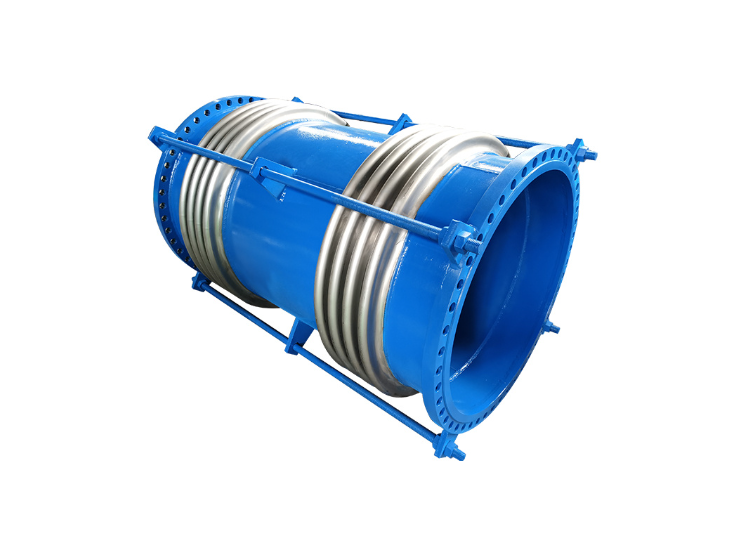
Lateral double expansion joints consist of two bellows and an intermediate balance cylinder, designed exclusively to absorb lateral offset movement of pipelines rather than axial expansion. Tie rods are indispensable structural components for this type of compensator for the following key reasons:
1. Bear the axial thrust generated by internal medium pressure
Fluid pressure inside the pipeline creates powerful blind plate force that pushes the two bellows apart axially. Without tie rods, this huge thrust will damage pipe supports, crack flanges and deform equipment. Tie rods transfer all internal pressure thrust to themselves, protecting the whole piping system from excessive axial load.
Fluid pressure inside the pipeline creates powerful blind plate force that pushes the two bellows apart axially. Without tie rods, this huge thrust will damage pipe supports, crack flanges and deform equipment. Tie rods transfer all internal pressure thrust to themselves, protecting the whole piping system from excessive axial load.
2. Restrict axial displacement while allowing free lateral deflection
The structural function of lateral double expansion joints is to absorb horizontal or vertical lateral displacement only. Installed tie rods lock the overall axial length of the joint, preventing bellows from being stretched or compressed axially and avoiding premature failure of corrugations.
The structural function of lateral double expansion joints is to absorb horizontal or vertical lateral displacement only. Installed tie rods lock the overall axial length of the joint, preventing bellows from being stretched or compressed axially and avoiding premature failure of corrugations.
3. Provide protection during transportation, installation and pressure testing
Tie rods fix the overall dimension of the joint during factory delivery and hoisting, preventing bellows distortion and instability caused by bumping. In hydrostatic or pneumatic pressure tests, they counteract test pressure thrust and stop the joint from overextending.
Tie rods fix the overall dimension of the joint during factory delivery and hoisting, preventing bellows distortion and instability caused by bumping. In hydrostatic or pneumatic pressure tests, they counteract test pressure thrust and stop the joint from overextending.
4. Balance load distribution of double bellows
Tie rods coordinate the deformation of two bellows simultaneously when lateral movement occurs, eliminating unbalanced load and avoiding fatigue cracking on one single corrugation group.
Tie rods coordinate the deformation of two bellows simultaneously when lateral movement occurs, eliminating unbalanced load and avoiding fatigue cracking on one single corrugation group.
Important note: Unlike temporary transport fixing bars, tie rods shall remain installed throughout the entire service life of the expansion joint and must not be removed.
Comparison of Fatigue Life: Single Layer 1.2mm vs Double Layer 0.6mm DN300 Bellows (Without Inner Liner)
Analysis of the Relationship Between Bellows Wave Height and Compensation Capacity: The Art of Balance in Design
Related Article

Internal‑pressure bellows: medium inside bellows, inner liner inside, tie‑rods needed for large displacement.
External‑pressure bellows: medium outside bellows, nested sleeve structure, good anti‑instability, tie‑rods normally not required.
External‑pressure bellows: medium outside bellows, nested sleeve structure, good anti‑instability, tie‑rods normally not required.
Internal‑pressure vs External‑pressure Metal Bellows Expansion Joints ?

NBR rubber expansion joints fail in high-temperature thermal oil systems because thermal oil runs above 300°C, while NBR can only handle ~90–140°C. This extreme heat causes rapid oil-swelling (softening and seal failure) and thermo-oxidative aging (hardening and cracking). The joint quickly fails, leading to thermal oil leaks and fire hazards. Use stainless steel or specially insulated expansion joints instead.
Why NBR Rubber Expansion Joints Cannot Be Used in High-Temperature Thermal Oil Systems
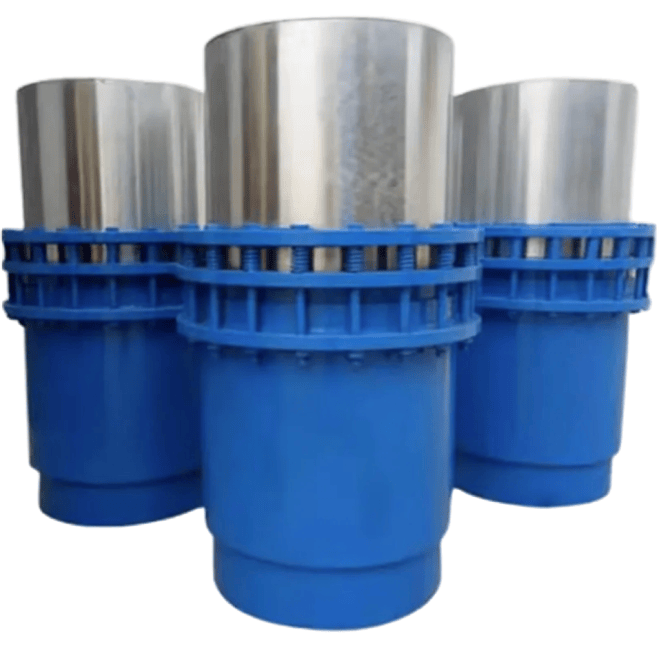
When selecting pipeline expansion components, many engineering purchasers and designers notice a common phenomenon: stock sleeve expansion joints on the market mostly adopt 200 mm as the basic axial compensation stroke, while the single-unit compensation capacity of conventional bellows expansion joints generally ranges from 50 mm to 120 mm. This difference is jointly determined by product principles, application scenarios and production economy.
Why Do Sleeve Expansion Joints Generally Start With a Compensation Capacity of 200 mm?

The counter-flange inner diameter is smaller than the expansion joint's flange bore to: fully compress the rubber sealing surface and prevent leaks, avoid sharp edges cutting the rubber during vibration, and act as a retaining ring to prevent pull-out accidents. This protects the rubber and ensures safety—always use matching flanges during installation.
Technical Explanation: Why Is the Inner Diameter of the Matching Counter-Flange Often Smaller Than That of the Rubber Expansion Joint's Own Flange?