
Mandatory Installation Conditions of Limit Tie Rods for Rubber Expansion Joints
author: Siyu Li
2026-07-09
Strict Working Conditions Requiring Limit Tie Rods
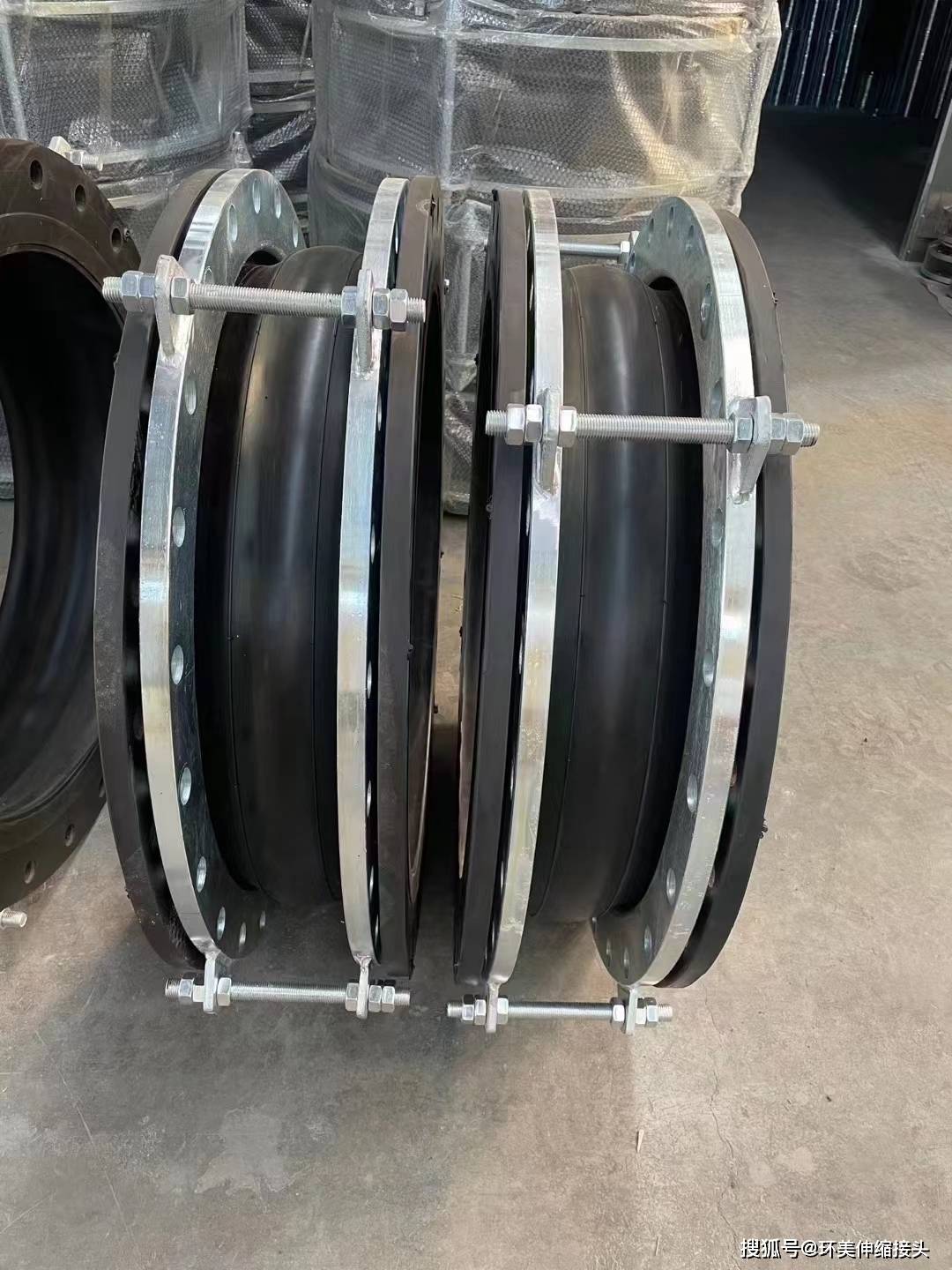
Limit tie rods are mandatory auxiliary components for rubber expansion joints under specific pipeline operating and installation conditions, which are specified in national standard drawings 13K204, CJ/T 208 and general pipeline installation specifications. Primarily, limit tie rods must be equipped for pipelines with high working pressure and severe water hammer impact. All rubber expansion joints with a nominal pressure of PN≥1.6MPa require limit tie rods regardless of pipe diameter. Meanwhile, pipelines with frequent pump start-stop, rapid valve closing and obvious water hammer impact, such as fire pump and circulating pump outlet pipelines, must be fitted with limit tie rods to resist instantaneous impact thrust even under low pressure conditions. In addition, large-diameter low-pressure pipelines also belong to mandatory installation scenarios due to the huge blind plate thrust generated during operation, especially pipes with DN≥300 and PN≥0.7MPa, as well as DN400 to DN600 and PN≥0.35MPa without reliable fixed supports.
Special Installation and Structural Scenarios
Vertical installation of rubber expansion joints is a key scenario requiring mandatory limit tie rods. For vertically arranged pipelines including vertical risers and vertical inlet and outlet pipelines of pumps, the rubber sphere will bear continuous tensile force formed by medium self-weight and pipeline internal pressure, which easily causes pulling-off of the flange steel wire ring. Therefore, all vertically mounted rubber expansion joints must be equipped with limit tie rods for protection. Besides, expansion joints at the inlet and outlet of vibration-intensive equipment such as water pumps, high-power fans and air compressors also need mandatory limit devices. The instantaneous blind plate thrust generated during the start and stop of water pump units is extremely large and may easily damage unprotected expansion joints, while severe vibration from fan and refrigerating unit pipelines can trigger excessive tensile deformation of rubber joints, making limit protection essential.
Limit tie rods are also compulsory for large-diameter main pipelines and pipe sections lacking effective fixing structures. In engineering practice, water supply, chemical and fire-fighting main pipelines with DN≥200 require limit tie rods, while high-strength limit screws are mandatory for super-large-diameter pipes with DN≥300. Without adjacent fixed supports or buttress piers on both sides of the expansion joint, the entire axial thrust of the pipeline will act directly on the rubber joint, so limit tie rods are necessary to share tensile loads. Pipelines with potential displacement and settlement risks also need such protection, including buried pipelines on soft soil foundations prone to uneven settlement, long straight pipelines with thermal displacement approaching the expansion joint’s rated limit, and overhead suspended pipelines under persistent self-weight tension.
High-Risk and Special Safety Scenarios
High-temperature medium pipelines and stress-concentrated pipe fittings are included in the mandatory installation scope for limit tie rods. When media such as hot water, condensed steam water and heat conduction oil run at a long-term temperature above 70℃, the rubber material will soften and lose tensile strength, significantly increasing the risk of pulling-off and cracking, which necessitates limit tie rods for safety protection. Similarly, 90-degree elbows, tees and blind-end pipe sections produce huge concentrated axial thrust from fluid steering, requiring limit devices if effective support constraints are unavailable.
For safety-sensitive working conditions, limit tie rods are indispensable protective measures. This covers fire protection pipe networks, chemical pipelines conveying flammable, explosive and toxic media, and overhead pipelines in earthquake-resistant design areas. These settings require limit tie rods to prevent medium leakage, joint failure and potential pipeline safety accidents.
It is worth noting that limit tie rods are only designed to restrict the maximum tensile displacement of rubber expansion joints and must not be locked during installation. A gap of 2 to 5 millimeters shall be reserved between the nut and the flange to preserve the joint’s normal functions of thermal expansion, contraction and displacement compensation. In conventional engineering applications, only small-diameter, normal-temperature, horizontal straight pipe sections with firm fixed supports on both sides are exempt from limit tie rod installation.
why flanged rubber expansion joints with integral rubber flanges require split (two-piece) backing flanges.
Why Stainless Steel Bellows Expansion Joints Are Lined with PTFE ?
Related Article

Internal‑pressure bellows: medium inside bellows, inner liner inside, tie‑rods needed for large displacement.
External‑pressure bellows: medium outside bellows, nested sleeve structure, good anti‑instability, tie‑rods normally not required.
External‑pressure bellows: medium outside bellows, nested sleeve structure, good anti‑instability, tie‑rods normally not required.
Internal‑pressure vs External‑pressure Metal Bellows Expansion Joints ?

NBR rubber expansion joints fail in high-temperature thermal oil systems because thermal oil runs above 300°C, while NBR can only handle ~90–140°C. This extreme heat causes rapid oil-swelling (softening and seal failure) and thermo-oxidative aging (hardening and cracking). The joint quickly fails, leading to thermal oil leaks and fire hazards. Use stainless steel or specially insulated expansion joints instead.
Why NBR Rubber Expansion Joints Cannot Be Used in High-Temperature Thermal Oil Systems
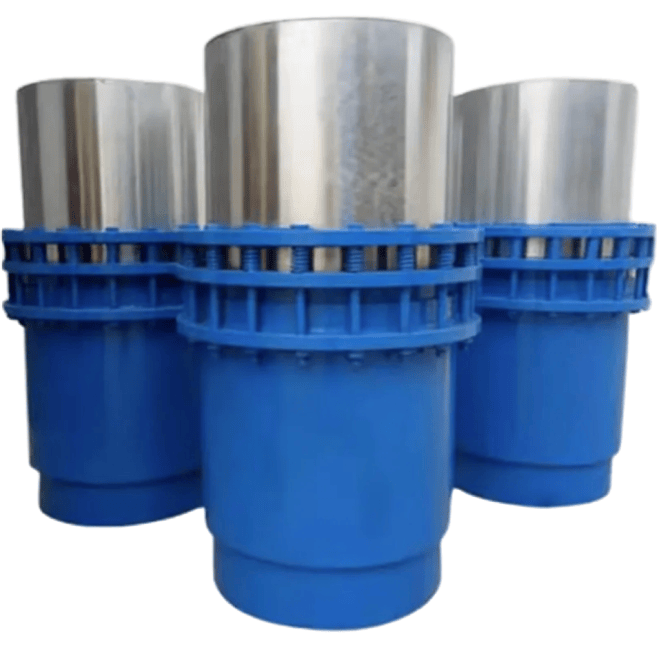
When selecting pipeline expansion components, many engineering purchasers and designers notice a common phenomenon: stock sleeve expansion joints on the market mostly adopt 200 mm as the basic axial compensation stroke, while the single-unit compensation capacity of conventional bellows expansion joints generally ranges from 50 mm to 120 mm. This difference is jointly determined by product principles, application scenarios and production economy.
Why Do Sleeve Expansion Joints Generally Start With a Compensation Capacity of 200 mm?

The counter-flange inner diameter is smaller than the expansion joint's flange bore to: fully compress the rubber sealing surface and prevent leaks, avoid sharp edges cutting the rubber during vibration, and act as a retaining ring to prevent pull-out accidents. This protects the rubber and ensures safety—always use matching flanges during installation.
Technical Explanation: Why Is the Inner Diameter of the Matching Counter-Flange Often Smaller Than That of the Rubber Expansion Joint's Own Flange?